Research Projects
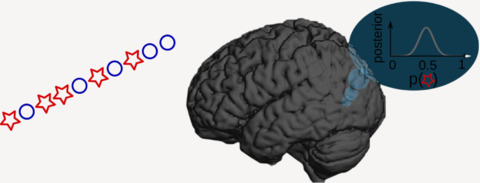
Bayesian inference optimally estimates probabilities from limited and noisy data by taking into account levels of uncertainty. In line with this principle, probability estimates are accompanied in humans by rational confidence levels that denote the precision of probability estimates. For this reason, Florent Meyniel has made the proposal that the human sense of probability is Bayesian. This…
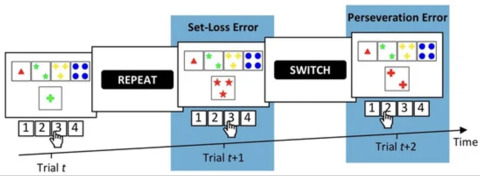
How do we make decisions, such as whether to order a red Bordeaux or a white Cabernet Sauvignon? The outcome of this decision will likely be one if you are thinking of combining it with oysters, and another if you are bound to combine it with boeuf bourguignon. This mundane example illustrates the flexibility with which we take context-dependent decisions. Context-dependent decision-making allows…
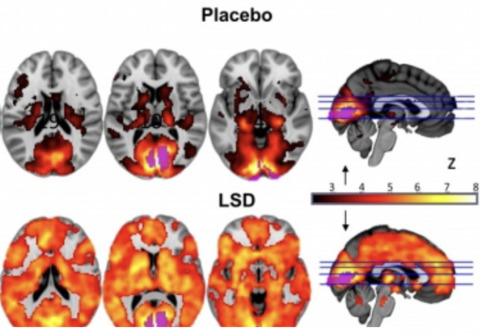
Clinical research on psychedelics has experienced unprecedented growth over the past decade, following their prohibition in the early 1970s, with highly promising results in various psychiatric disorders such as depression, end-of-life anxiety and addictions.
Psychedelics act as serotonin 5-HT2A receptor agonists, leading to acute perceptual and cognitive distortions. In a medical setting, the…
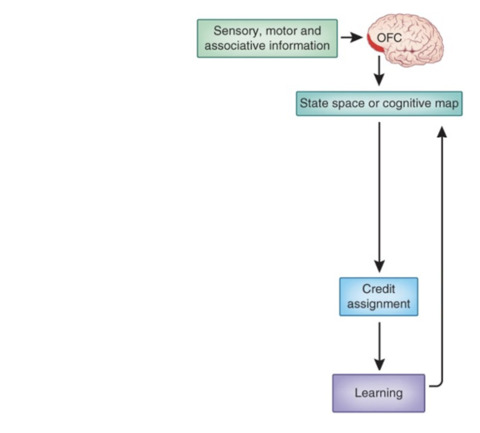
Biological agents pursue their goals in a lifelong series of encounters with noisy and changing natural environments, relying on incomplete and costly information about these environments. In such fundamentally uncertain natural contexts, learning and decision-making are inherently coupled in two ways. First, learning, understood as the updating of representations that serve as inputs to…
Research Methods
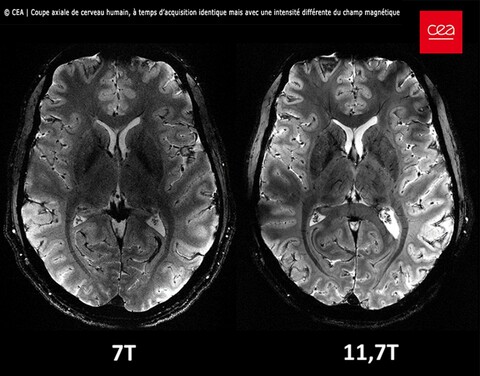
We use high field (3T, 7T and soon, 11.7T) structural and functional MRI to explore fundamental research questions, such as learning and decision making processes, as well as for clinical applications like MRI-guided TMS and DBS. The increased field strength enhances sensitivity in BOLD fMRI and allows for improved resolution, hence enabling more precise measurements of small brain structures and…
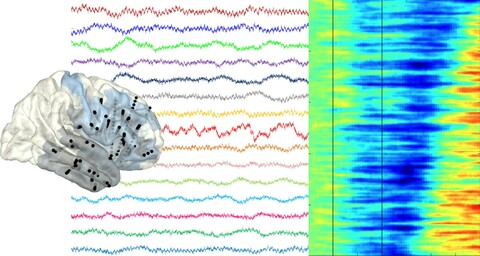
In the lab, we use multiple electrophysiological approaches to study the human brain. We perform commonly used MEG (magnetoencephalography) and EEG (electroencephalography) recordings to study the synchronized activity of cortical neuronal populations. We also investigate the function of deeper cortical and subcortical areas using intracranial recordings (sEEG) performed in patients suffering…
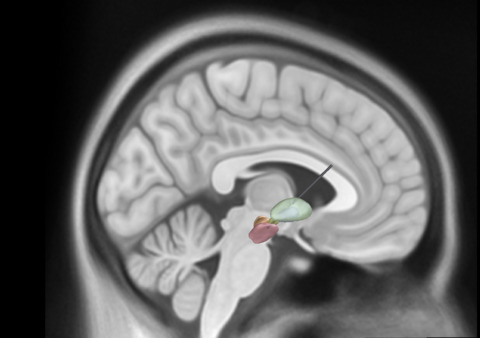
Our work with patients allows us to study cognitive processes and brain functions using causal interventions such as pharmacology, TMS (transcranial magnetic stimulation), VNS (invasive vagus nerve stimulation) and DBS (deep brain stimulation). Pharmacological interventions in our team target NDMA, serotonin and noradrenaline receptors, using ketamine, classic psychedelics and atomoxetine,…
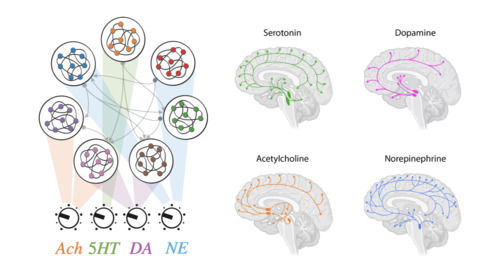
The field of computational neuroscience originates from Physics, where there is a strong tradition to model nature from first principles. For instance, Joao has modeled working memory using ring networks, in which their connectivity structure is designed so that the required attractor dynamics emerges. This approach is extremely successful in modeling simple tasks, but has been proven limited…
Funding

ANR
Project 18-CE37-0010-01 CONFI LEARN 2018-2020 Young Investigator (Florent Meyniel)
Project CRCNS 19-NEUC-0002-01 EXPLORE 2020-2023 (Florent Meyniel, co PI: Angela YU)
Project 21-CE37-0004 DUALTRACK Young Investigator 2021-2025 (Philippe DOMENECH)
Project 23-CE17-0070-02 NEUROCD 2023-2027 (Philippe DOMENECH, co PI: Mircea POLOSAN)
Project PSILOTRAZ (Lucie Berkovitch)

CEA
Project BlueSky EXPLORE+ 2023-2027 (Florent Meyniel, co PI: Philippe Ciuciu)
Project BrainSync 2024-2029 (Florent Meyniel workpackage leader; Project’s PI: Philippe CIUCIU)

Project PRME-19-0021 DEPVNS (Philippe DOMENECH, co PI: Fabien VINCKIER)
Project 947105-NEURAL-PROB 2021-2027 Starting Grant (Florent Meyniel)